Read the stars on your finished painting before deciding whether to sell it, improve your next design, or keep it for display. Paint to Get Rich painting rating is a separate result from appraisal and the collector’s offer. A larger price does not, by itself, mean that you created a higher-rated picture.
The game’s Four-Star Artist badge gives you a four-star milestone: it requires a painting rated four stars or higher. You can aim for that result. Test any promised five-star recipe based on one color, a blank canvas, or a fixed drawing time before relying on it.
Separate the four numbers you see
It is easy to confuse the rating with a number from another part of the sale. Finish a picture, inspect its result, and follow that same picture through the selling process. You can then see which number changed.
| Number | What to use it for | What it does not prove |
|---|---|---|
| Painting stars | Comparing the displayed rating of completed pictures | A guaranteed cash payout |
| Appraisal or listed painting value | Recording the value assigned before a sale | The collector will pay exactly that amount |
| Collector offer | Deciding whether to accept or negotiate this deal | The picture gained more stars |
| Cash received | Measuring the actual sale outcome | The hidden rating calculation |
Paintings can receive half-star results, so record the exact display instead of rounding to a whole star. Two paintings with the same stars can have different values. Keep stars and money in separate columns; a difference in value does not mean the rating screen is broken.
A website’s approval percentage is another unrelated number. Roblox experience likes describe player feedback about the whole game; they are not the score of your artwork.
Use the four-star badge as a milestone
The Four-Star Artist badge belongs to this experience and describes its requirement as creating a painting rated four stars or higher. Check your completed painting and your Roblox badge inventory when you reach that result.
The badge requirement gives you a target, not the calculation behind it. It does not tell you to draw a particular subject, use a minimum number of brush strokes, or choose a certain canvas shape. Test those choices separately.
If you are working toward this milestone, make the next picture a manageable project. A simple landscape, face, or geometric design is easier to repeat and compare than a detailed scene that takes most of your session. You can still make elaborate art for its own sake; just avoid using drawing time as proof of a better score.
Run comparisons you can actually use
Change one design choice at a time. Keep the same account and studio setup, then compare a small group of completed paintings. That keeps a new purchase or a different collector from getting mixed up with the drawing technique you are trying to test.
- Make a straightforward picture and record its exact stars and appraisal.
- Repeat the basic idea with one deliberate change, such as a different background or added detail.
- Record the second result before opening a collector negotiation.
- Repeat the comparison instead of treating one lucky result as a rule.
- Decide whether the extra effort improved the outcome enough to keep using it.
This is a comparison method, not a guaranteed way to increase stars. Keep notes short: a description, stars, value, and the relevant account or studio changes are enough. Screenshots of the result panels help if you forget whether a later number was an appraisal or an offer.
Keep paid value changes out of your drawing test
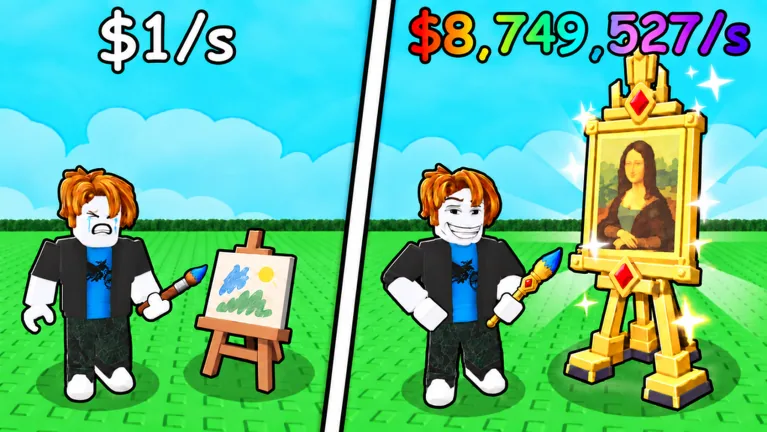
Large painting prices from an account with paid boosts are a poor baseline for a new player. Before copying a money-making example, check which boosts and studio purchases are active. A result from that account cannot tell you what your own unboosted painting will sell for.
For a Paint to Get Rich painting rating comparison, finish the comparison before buying upgrades or enabling a new paid feature. If you change your setup, start a fresh set of results. You do not need to purchase anything simply to discover whether two drawings receive different displayed ratings.
Once your question changes from stars to income, use the money guide. That comparison needs completed sales and actual cash received, not just a screenshot of a valuable painting.
Improve the picture without inventing a scoring formula
Use the painting editor to make your intended subject clearer. A background that contrasts with the subject and a few readable shapes can make a picture easier to recognize. These are drawing choices, not confirmed inputs to a star formula.
Stop when the design meets your goal. If you keep adding strokes, attempts become harder to compare and a quick painting can turn into a long project without a better sale. When a result disappoints you, record it and try a simpler variation before rebuilding the whole studio around one score.
Your next action should follow the result you actually have. Sell an ordinary painting if you need cash for progression, or keep a favorite for your gallery plans. Check the selling guide before treating an appraisal as money already earned.
FAQ
Can paintings receive half-star ratings?
Yes. Record the exact stars shown on the completed painting, including a half star, so your comparisons do not lose that difference.
Does a higher sale price always mean more stars?
No. Stars, appraisal, collector offers, and cash received are separate readings. Compare the same field across paintings rather than using price as a substitute for rating.
How do I earn the Four-Star Artist badge?
Create a painting rated four stars or higher. The official badge describes that threshold; check your result panel and badge inventory after meeting it.
Is there a guaranteed five-star drawing recipe?
Do not build your progression around that promise. Test repeatable designs on your own account, keeping the studio and paid features stable, before trusting a claimed shortcut.
Should I buy a boost to improve my star test?
You can compare displayed ratings without buying a boost. A new purchase changes your setup and makes earlier price comparisons harder to interpret, so keep that decision separate from your drawing experiment.